
What Far North Queensland rum is actually made from

Updated: 6 days ago
Rum is usually made from molasses. Not always and not everywhere, but molasses is the raw material the industry was built on, and it is what most of the world's rum starts as. Ours does not. FNQ Rum Co. rum begins with North Queensland sugarcane syrup, and the bottle says so.
Three liquids, one plant
Cut cane is mostly water and sugar held in fibre. Crush it and you get juice, and what happens to that juice next decides more about the finished spirit than most people expect. Ferment it fresh and you are making rhum agricole. Boil it, spin the sugar crystals out and sell them, and what is left is molasses. Take the water out instead of the sugar, and you have cane syrup.
Molasses is stable, ships anywhere, keeps for a long time and is inexpensive. Those four properties are why the overwhelming majority of the world's rum is made from it, and a great deal of excellent rum with it. It is a by-product, which is a description rather than an insult.
FNQ Rum Co. has written the full three way comparison on its own site if you want the detail.
What we use, and where it comes from
Ours is North Queensland sugarcane syrup: cane juice reduced by evaporation with nothing crystallised out, from cane grown on the Atherton Tablelands and crushed within a week of the cut.
The Tablelands sit high and cool for the tropics, and the soil is old volcanic country. Cane grown up here at around 700 metres takes longer to ripen than coastal cane does.
The week is not a detail. Cut cane begins degrading within hours, so the run from paddock to press is short out of necessity rather than for effect. That syrup is then the only sugar that ever enters the wash. There is no molasses, no refined sugar and no dextrose in it.
What it changes at the still
A syrup wash is cleaner than a molasses wash and carries less sulphur, which lets us distil at a lower strength. Distilling lower is generally how a distiller keeps the character of the raw material in the spirit instead of rectifying it away.

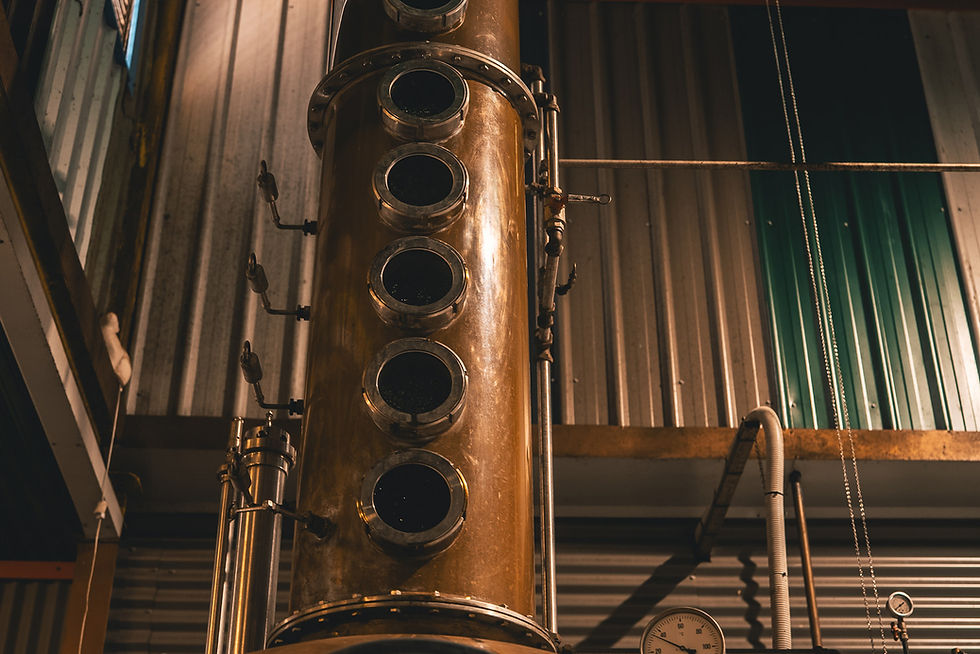
After that it is heat, copper and judgement. Warm ferments push ester formation, which is where a lot of the fruit in a young rum comes from. Copper reacts with what sulphur there is and softens the spirit without stripping it. The cuts are called by nose at the spirit safe rather than by a timer.
Is one better than the other?
No, and it is worth saying so plainly, because this is the part of the conversation where marketing usually takes over. Each starting liquid has a characteristic direction and a set of practical constraints, and each has produced world class rum and forgettable rum.
What the raw material does honestly tell you is something about the supply chain. Juice means local by necessity. Syrup usually means regional. Molasses can mean the mill next door or a tanker from the other side of the world, and the label will rarely say which.
Where to taste the cane itself
Platinum Cane Spirit is the bottle with the least in the way of the raw material. It is crystal clear, filtered through volcanic rock and bottled at 40 percent. It was named World's Best Sugarcane Spirit at the 2024 World Rum Awards, and took the Trophy in the Agricole and Sugarcane Juice class at the 2025 Australian International Rum Awards with 94 points. There is more on what each of those awards was actually for. There is also a separate piece on when cane spirit becomes rum.
Common questions
Is cane syrup rum the same as rhum agricole?
They are close relations rather than the same thing. Rhum agricole is distilled from fresh cane juice. Ours is distilled from that juice with the water taken out, which is why competitions have judged Platinum in agricole and sugarcane juice classes.
Does using syrup make the spirit sweeter?
No. The syrup is the sugar the yeast eats during fermentation, and what the yeast eats becomes alcohol rather than sweetness. Nothing is added afterwards either: no sugar, no colouring, no flavouring, water to strength only.
Where can I try it?
Taste the range at the cellar door at Mt Uncle Distillery in Walkamin on the Atherton Tablelands, or explore the FNQ Rum Co. range online.

Comments