
What the tropics do to a barrel of rum

Updated: 6 days ago
Most of the rum sold in Australia was matured somewhere cool. Ours was not. The cask hall at Walkamin sits an hour inland from Cairns, and the barrels in it spend the whole year in tropical air. That changes what comes out of them, and it changes how much comes out of them.
A barrel breathes twice a day here
Humidity in the cask hall stays above 70 percent for most of the year. The room moves with the day, pushing spirit into the oak and drawing it back out again twice in every twenty four hours. In a cool warehouse that exchange is slower, gentler, and happens fewer times over the life of a cask.
Extraction and oxidation both run harder
Two things speed up in the heat. Extraction, which is what the spirit pulls out of the wood. And oxidation, which is what air does to a spirit over years. Between them they are the reason a tropical cask can taste older than the number on the label suggests.

And you pay for it in litres
The third thing that speeds up is evaporation, and it is the part that never appears on a label. Considerably more spirit leaves a barrel here than leaves one in a temperate warehouse. FNQ Rum Co. puts it plainly on its production page: a tropical five can read like a temperate ten, but you pay for it in litres.
That sentence is the distillery's own framing rather than a measurement, and it is worth being exact about the difference. No angel's share percentage is published, no cask hall temperature, and no equivalent age multiplier. A number invented to sound precise would be worth less than the sentence above, so there is not one here.
What it looks like in the bottle
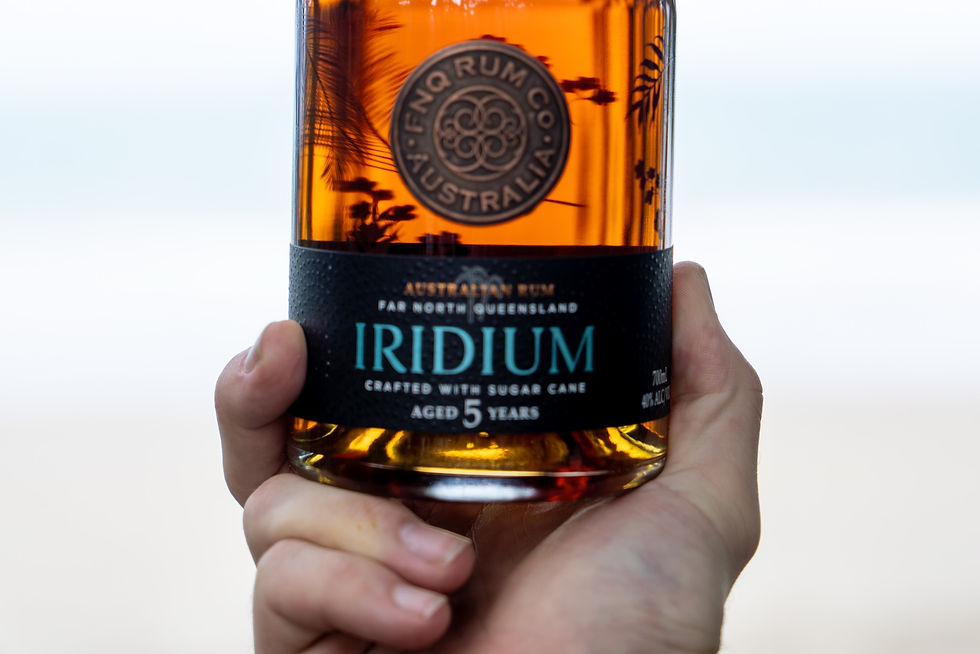
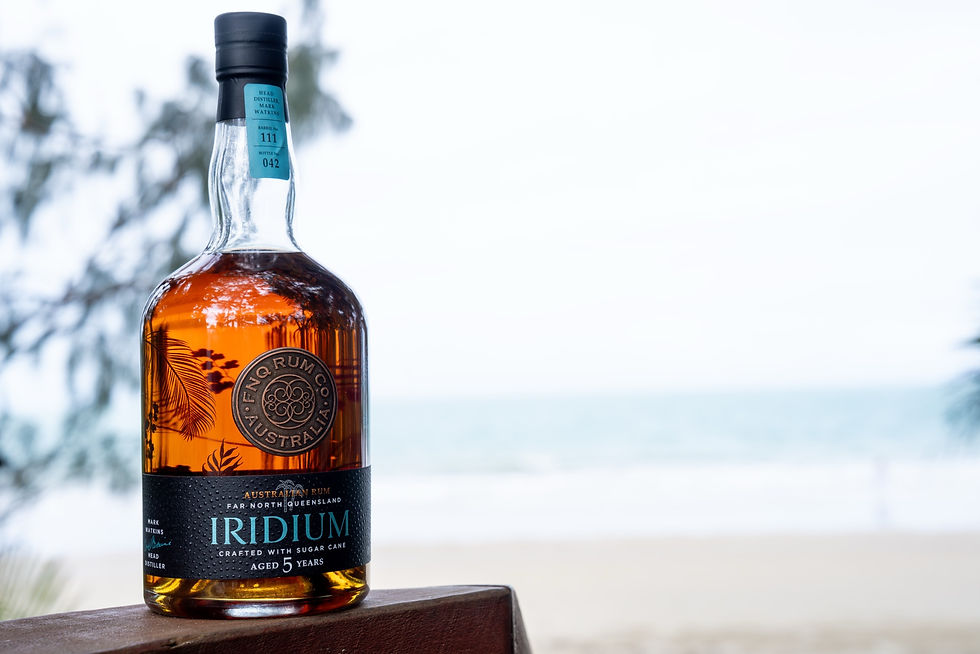
Iridium 5yr Dark Rum spends five years in ex red wine hogsheads and is bottled at 40 percent. It was named World's Best Pot Still at the 2021 World Rum Awards. Five years here is two and a half times the statutory minimum of two years in wood.
At the far end of the hall, Iridium X spends ten years in selected oak and is bottled at 47 percent. It took a Trophy at the 2024 Australian International Rum Awards with 90 points and Gold at the 2026 World Rum Awards. Ten tropical years is a long time to leave a barrel losing volume, and that is most of why the older bottle costs what it costs.
How the age on the label is decided
The age stated is the age of the youngest spirit in the bottle, which is not a house convention but the rule: where spirits are blended, the maturation age counts as that of the youngest constituent. The same rules reserve the words old and very old for five and ten years in wood respectively, so neither can be used loosely.
The barrel number is printed on the label and the cask strength is recorded at fill. Casks are reconditioned rather than new, and the type and origin of the wood is published for each release.
Nothing leaves the cask hall on a schedule. Each barrel is tasted to one of four verdicts: continue, re-gauge, release or reject. The rejections stay in the record.
Common questions
Does tropical maturation make rum better?
It makes it different, and it makes it move faster. Heat and humidity pull more out of the wood in a given year, so a young tropical rum can have a depth a young temperate one does not. Whether you prefer the result is a matter of taste rather than of climate.
Why is older tropical rum expensive?
Partly the years. Mostly the litres. A barrel that has spent ten years in a hall above 70 percent humidity is not a full barrel any more, and everything that left it still has to be paid for by what stayed.
Where can I taste it?
At the cellar door at Mt Uncle Distillery in Walkamin. If you want the cane before any of this happens to it, there is a separate piece on what the rum is made from, and another on what each award in the range was for.

Comments